
In the dynamic field of web design and web development, there is one constant that can determine the success or failure of a project: the quality of the design. A key concept for determining this quality is Design Fidelity. But what exactly does this mean and why is it so important? In this article, we will clarify these questions and show how the use of different levels of design fidelity paves the way to a high-quality website or web application.
Why is Design Fidelity important?
Design Fidelity refers to the accuracy with which a design represents the final product. It is a crucial aspect of UserExperience (UX) and can significantly influence user behavior. Furthermore, it plays an important role in communicating your brand message and corporate identity, especially in the design of Business Websites.
Levels of Design Fidelity
Design Fidelity can be divided into three levels:
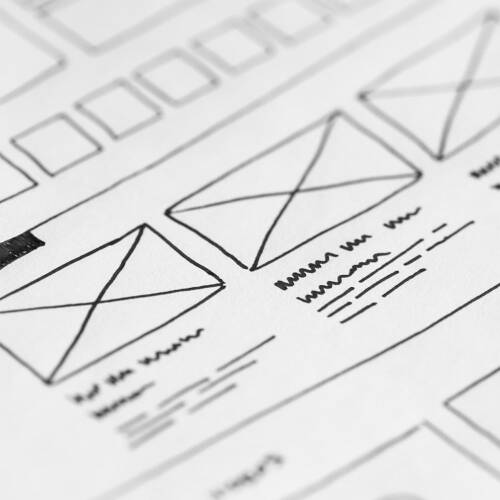
- Low Fidelity (Lo-Fi): Low-fidelity designs are rough sketches or wireframes. Since they can be created relatively quickly and easily modified, feedback at this stage is often very general and focuses primarily on basic aspects of the design. For example, feedback might answer questions about the overall layout, positioning of elements, or the flow logic of the design.
This early feedback is extremely valuable as it helps designers make fundamental decisions about the design before moving into more detailed phases. It also allows stakeholders to actively participate in the design process and communicate their expectations and ideas early on.
- Medium Fidelity (Mid-Fi): With the transition to medium-fidelity designs, the drafts begin to show more details and more specific elements. Here, feedback can now become more detailed and relate to aspects such as colors, fonts, or the use of images and symbols.
At this stage, feedback is often gathered from a broader group of people, potentially including users or customers who get a more realistic view of the final product. It helps designers further refine the design and identify any problem areas.
- High Fidelity (Hi-Fi): High-fidelity designs are as detailed and interactive as possible. They are intended to represent the final product as accurately as possible. At this stage, feedback is often very specific and focuses on individual elements of the design or on the user's interaction with the product.
Feedback on high-fidelity designs can come from user testing, A/B testing, or usability testing and provides valuable insights into actual user behavior. It enables designers to adjust the design to best meet user expectations and provide an optimal user experience.
Advantages and Challenges of Individual Levels
Each level of design fidelity has its advantages and disadvantages. Lo-Fi designs are quick and inexpensive to create, but only provide a rough idea of the final product. Hi-Fi designs, on the other hand, offer a realistic picture of the final product, but are time-consuming and expensive to produce. Mid-Fi designs offer a compromise between both extremes.
The Importance of Feedback at Different Levels of Design Fidelity
In the design process, feedback is not only indispensable, but even a central aspect. It ensures communication between all stakeholders and significantly contributes to the quality and effectiveness of the final product. It enables continuous improvements and adjustments and thus promotes the agility and adaptability of the project.
Feedback can take various forms and come from diverse sources. It can be both qualitative and quantitative, from specific technical notes to general user reviews. Each type of feedback can provide valuable insights and contribute to the development of a successful design.
The Feedback Process
An effective feedback process consists of several steps:
-
Gathering Feedback: First, feedback must be actively gathered. This can be done through various methods, such as surveys, interviews, user testing, or review sessions. When selecting the appropriate method, the current state of the design should be taken into account.
-
Analysis of Feedback: The collected feedback must be carefully analyzed. It is important to consider the feedback in context and understand its relevance and significance for the design.
-
Implementation of Feedback: Based on the analysis, the relevant feedback points should be translated into concrete actions. This can include changes to the design, adjustments to features, or a reorientation of the entire project.
-
Follow-up and Re-evaluation: After implementing the feedback, its impact should be monitored and re-evaluated. This closes the feedback loop and makes it possible to assess the effectiveness of the feedback and the resulting changes.
The Continuous Cycle of Feedback and Improvement
Feedback is not a one-time process, but a continuous cycle. It should be gathered, analyzed, and implemented regularly and systematically throughout the entire design process. With each iteration of the design, new feedback should be gathered to review the improvements and identify new optimization opportunities.
Feedback is therefore not only a tool for error correction, but also for continuous improvement and innovation. It promotes collaboration and understanding between designers, developers, stakeholders, and users and helps create a product that is not only beautiful and technically flawless, but also meets the needs and expectations of users.
Influence of Design Fidelity on Testing
The higher the design fidelity, the more realistic the tests that can be conducted. Lo-Fi designs are well-suited for simple usability tests, while Hi-Fi designs enable more precise analysis of user behavior and user experience.
Conclusions: Design Fidelity as a Success Factor for Web Design
Design Fidelity is more than just a question of appearance or aesthetics. It is an essential component of the design process and plays a crucial role in the development of websites and digital products that are not only visually appealing, but also functional and user-friendly.
Costs and Benefits
However, the use of design fidelity involves costs. Creating detailed high-fidelity designs requires time, resources, and expertise. These costs can be significant depending on the project scope and complexity. On the other hand, using low-fidelity designs offers a cost-effective way to quickly sketch concepts and gather feedback, but can lead to additional work in later phases if important design decisions are still open.
The benefit of design fidelity is reflected in the quality of the final product. A well-thought-out and carefully designed product can lead to higher user satisfaction, greater user retention, and ultimately higher revenues. It can also help avoid costly errors or changes in later development phases. Expertise in UX/UI Design plays a crucial role here.
Weighing Costs and Benefits
It is important to make a balanced decision between the costs and benefits of design fidelity. This requires careful planning and consideration of various factors, such as the project budget, timeline, project goals, and the expectations of stakeholders and users. Concept Workshops can make a valuable contribution here.
In many cases, it can make sense to start the design process with low-fidelity designs to develop basic concepts and structures and gather feedback early on. As the project progresses, the transition can then be made to higher fidelity levels to work out details and further refine the design.
In other cases, especially for complex or highly interactive projects, it may be necessary to use high-fidelity designs from the start to gain an accurate understanding of the user experience and interactions. For this, we offer comprehensive solutions in the area of Apps & Online Portals.
Summary and Outlook
In this article, we have seen that design fidelity is an important factor for developing high-quality websites and web applications. By combining different levels of design fidelity, you can improve the user experience, collect accurate feedback, and conduct realistic tests. With regard to future trends, the importance of design fidelity is likely to continue to increase as more and more companies recognize the advantages of a well-thought-out and professionally designed UX/UI Design.
We at mindtwo are proud to use our expertise in design fidelity for our clients and look forward to assisting you in realizing your next website or web application. For comprehensive consultation on your project, you are welcome to schedule a Concept Workshop with us. Until then – stay creative and curious!