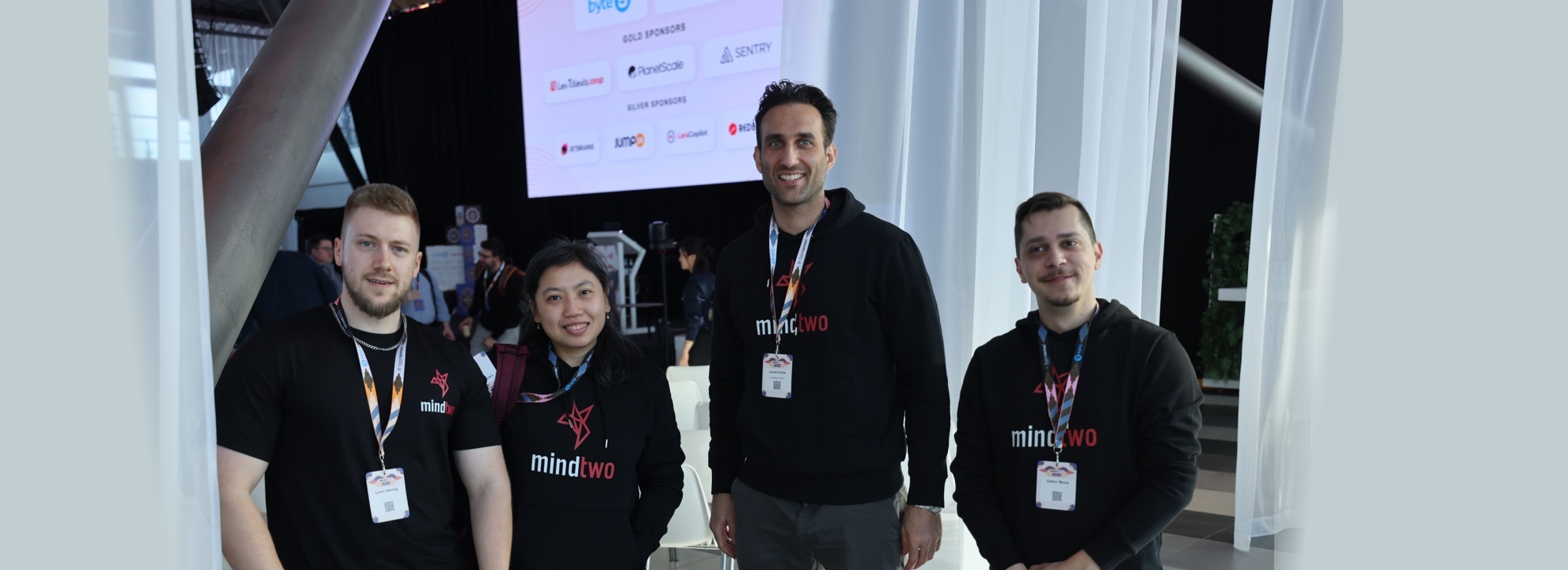

Two days, around 1,000 attendees, an impressive Passenger Terminal right on the IJ waterfront, and a lineup covering the full spectrum of modern web development: Laracon EU 2026 on March 2–3 in Amsterdam delivered – on every level. We were on site with a five-person team – originally six colleagues were supposed to attend, but one team member unfortunately had to cancel at short notice. Still: We attended talks, had great conversations, and returned to Bonn with a clear conclusion: The Laravel ecosystem is making a massive leap right now – and AI is the common thread running through nearly everything.
In this recap, we summarize what stood out to us most, which announcements are relevant to our work, and why Laracon EU will remain a must-attend event for us in 2027.
Record Attendance and Community Spirit
The energy was palpable from the moment Nuno Maduro opened the conference: This year's Laracon EU, with around 1,000 attendees, was the largest European Laravel conference ever. The Passenger Terminal Amsterdam provided the perfect setting – spacious enough for over a thousand developers, yet designed so that personal conversations naturally happened between talks.
Our hotel – the Mövenpick right next to the conference venue – turned out to be an ideal choice. Quite a few speakers and attendees were staying there as well. Amsterdam itself did the rest: The city is tailor-made for an event like this. Going out for dinner together as a team after the conference day, sorting through the day's impressions, and discussing what we'd heard – for us, that's just as much a part of Laracon as the talks themselves.
The Big Announcements: Laravel 13 and the AI SDK
By far the most discussed moment of the conference was Taylor Otwell's keynote on the evening of the first day. And for good reason: What was announced and, above all, demonstrated live on stage fundamentally changes the way we work with Laravel.
The "Merge It" Moment – The Complete SDLC in Under Two Minutes
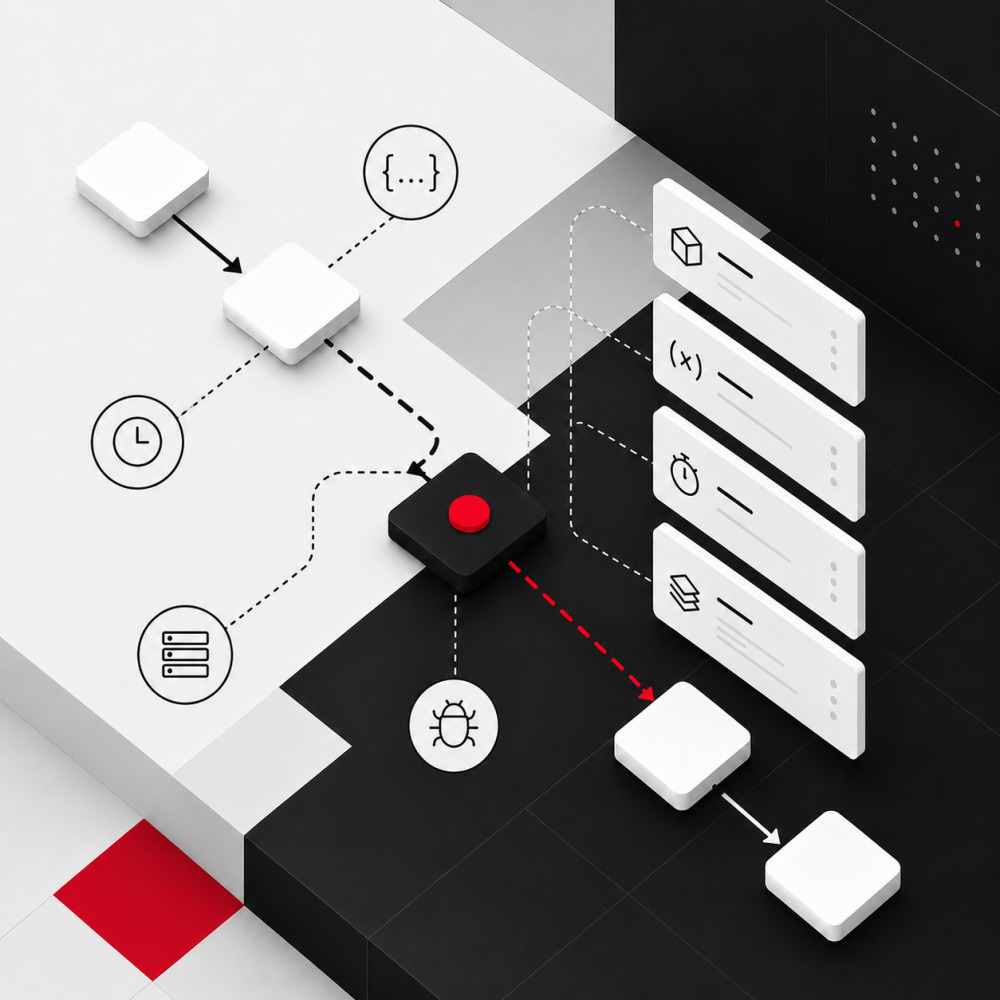
If there was one single moment that made the vision behind the entire Laravel ecosystem tangible, it was Taylor's live demo on stage: The complete Software Development Lifecycle – from error detection to deployment – in under two minutes, live in front of 1,000 attendees:
- A bug occurs in the application.
- Nightwatch detects the error automatically.
- OpenCode (with Nightwatch MCP + Boost) analyzes and fixes the error autonomously.
- A pull request is automatically opened.
- Laravel Cloud creates a preview environment.
- Taylor reviews, says "Merge it" – and the change goes live.
The room was electrified. What unfolded in real time wasn't some future scenario – it's the concrete direction the Laravel ecosystem is heading: A fully integrated workflow where monitoring, AI-powered debugging, code review, and deployment seamlessly interlock. Taylor himself put it succinctly: Laravel, with its clear conventions, comprehensive documentation, and 15 years of example code, is ideally positioned for an era in which AI agents are increasingly becoming part of the development process.
Laravel 13 – Release on March 17, 2026
Laravel 13 is imminent and brings not only technical improvements but, above all, a conceptual shift: PHP Attributes as the primary configuration method. Middleware, authorization, and job configurations can now be defined declaratively via attributes – directly on controllers, models, and job classes. This reduces boilerplate, makes code more readable, and aligns with the philosophy that runs through the entire framework: Convention over Configuration.
Laravel AI SDK – From Beta to Production
The Laravel AI SDK ships as a stable release with Laravel 13, providing the technical foundation for what Taylor demonstrated on stage. The core features:
- Provider-Agnostic: No lock-in to a specific AI provider. The SDK abstracts the interface, allowing you to switch between different LLM providers.
- Model Failover: If one model goes down, a fallback automatically kicks in – critical for production applications.
- Agent Classes with Schema-Defined Output: Structured AI responses that integrate in a type-safe manner into existing application logic.
- Vector Embedding and Similarity Search: Integrated directly into Eloquent, significantly simplifying semantic search in Laravel applications.
- Image Generation and Remixing: Native image generation as part of the SDK.
- Queuing of AI Tasks: AI tasks can be processed through Laravel's queue system as usual.
For us as an agency that consistently relies on Laravel for developing custom web applications, the AI SDK opens up a pragmatic path to integrating AI functionality into existing and new projects – without having to build our own abstraction layers.
Further Ecosystem Updates
- Laravel Boost has been extended with "Skills" – context-specific knowledge bases for packages like MCP and Tailwind CSS, automatically generated based on project dependencies.
- Passkey Authentication is coming to all Starter Kits and Laravel Fortify, complemented by a client-side companion package.
- New Starter Kits with Svelte support and a redesigned Teams feature that replaces Jetstream's URL-based implementation.
NativePHP "Super Native" – The Moment That Electrified the Room
If one talk left the room in awe, it was Shane Rosenthal's presentation on the second day. The day before, Simon Hamp had already presented the current state of NativePHP for Mobile: The modular plugin architecture, the free open-source core "NativePHP Air," and the tooling around Jump and Bifrost for App Store deployments.
But Shane took it a step further the next day: "Super Native" – an entirely new approach where Blade components and Tailwind CSS classes are translated directly into native UI elements through a custom parser. No WebView, no bridge, no overhead. The benchmarks were impressive: UI interactions in the microsecond range, in some tests faster than React Native and Flutter.
The live demo showed a functional to-do app with Eloquent, various native UI components, and – most spectacularly – complete app clones (Airbnb, Twitter, Facebook) that an LLM had generated in a single pass and that rendered as 100% native UI. No WebView, everything native.
For PHP development teams, this means: Existing Laravel and PHP expertise can potentially be leveraged for native mobile and desktop development – a paradigm shift we're following with great interest.
AI as a Common Thread – Not a Buzzword
What set Laracon EU 2026 apart from other conferences: AI wasn't the flashy headline topic of a single keynote, but rather wove through the entire conference as a practical, tangible aspect. Several talks illuminated different facets – and it was precisely this breadth that impressed us.
"AI Won't Fail Loudly – It'll Fail Quietly" – Yannick Kupferschmidt
Another talk addressed a topic that becomes increasingly relevant as AI adoption grows in development teams: The danger of AI agents doesn't lie in obvious errors, but in subtle bugs and gradual architecture drift. The antidote: "Context Engineering" – not just better prompts, but structured guidelines files, reusable skills, and deliberate control over what an agent receives as context. Larger context windows don't automatically mean better results – targeted context does.
"Unblocking Your Users with AI" – Peter Suhm
Peter Suhm delivered a pragmatic framework for integrating AI into existing Laravel applications – with three entry points:
- The Blank Slate: When users don't know where to start, an LLM generates an initial draft.
- The T-Junction: When facing difficult decisions, a small, fast model suggests an option.
- The Maze: When users can't find something, embedding models and vector databases enable semantic search.
The key takeaway: None of these approaches require a complete overhaul of the application. It's about deploying AI precisely at the points where users get stuck.
Refactoring to Parallel – Marcel Pociot
Marcel Pociot from Beyond Code addressed a very real challenge: How can multiple AI agents work on a codebase in parallel without their changes overwriting each other? His solution: Copy-on-Write Clones instead of traditional Git worktrees, orchestrated through his new macOS app Polycope. The app manages isolated workspaces, allows interaction with various AI agents (Claude, Codex) in each workspace, and provides a UI for diff reviews and merging.
Inertia v3 – Simpler, Slimmer, Smarter
Joe Tannenbaum's talk on Inertia v3 was one of the highlights for our frontend team. We use Inertia.js in numerous projects, and the announced improvements address exactly the pain points we encounter day to day:
- Radically simplified setup:
createInertiaAppis now based on Convention over Configuration. Less boilerplate, faster onboarding. - SSR out of the box: The separate
ssr.jsfile is gone. Server-side rendering works in development mode via a new Vite plugin – significantly easier to debug. - Slimmer bundle: Axios as a dependency has been replaced by an internal XHR client.
- Optimistic Updates: UI changes are displayed immediately, with automatic rollback on server errors.
- Instant Visits: The next page's component is preloaded client-side while the server request is still in progress – navigation feels nearly instantaneous.
- Layout Props: An elegant solution for child components to update props in a persistent parent layout.
These improvements make Inertia.js even more attractive as a bridge between Laravel backend and modern frontend – an approach that has long proven itself in our web development practice.
Talks That Will Resonate in Day-to-Day Project Work
Beyond the major announcements, there were a number of talks that were less spectacular but enormously valuable for daily work:
Dan Harrin – Better Abstractions Through Description, Not Instruction
Dan, co-creator of Filament, advocated for a declarative approach: Users of an abstraction should describe what they want – not how it should be implemented. Layered complexity with flags, options, and closures as escape hatches gives developers of varying experience levels different entry points. For us, as frequent users of Filament in our Laravel projects, the talk provided valuable impulses for our own package architectures.
Ryan Chandler – The Unhappy Path Deserves More Attention
Error handling as a standalone design concern: Custom exceptions with context and custom rendering, result objects instead of try-catch for expected errors, and a clear separation between validation (FormRequest) and business logic (action classes). It sounds like details – but in practice, it makes the difference between maintainable and fragile software.
Tobias Petry – One Billion Records with Laravel
Tobias demonstrated how PostgreSQL with the TimescaleDB extension makes even massive data volumes analytically manageable: Hypertables for automatic partitioning, columnar storage for analytical queries, and continuous aggregates for precomputed, hierarchical evaluations with response times in the millisecond range. A highly relevant approach for scalable Laravel applications with growing datasets.
Leah Thompson – Modern CSS Replaces JavaScript
A refreshingly pragmatic talk: :has() selectors, container queries, anchor positioning, clamp(), and light-dark() – modern CSS features that in many cases make JavaScript for UI behavior obsolete. For our frontend work, a good reminder to regularly check what the browser can now do natively.
Luke Kuzmish – Effective Code Reviews
Code reviews as team culture: Documented standards, tooling enforcement (testing, linting, static analysis), conventional comments, and the important principle of directing feedback at the code, not the person. And: Don't forget praise. Sounds obvious – in practice, it often isn't.
Pete Heslop – Real-World UX for Better Projects
The parallels between physical and digital user experience – onboarding like in a restaurant, friction reduction like at an airport, error planning like in a hospital. His key line nails it: "Never underestimate the intelligence of your audience, and never overestimate your audience's prior knowledge."
John Drexler – Ship to Production on Day 1
A passionate plea for early deployment: Locally developed features create an illusion of progress. The real problems – legacy data, external APIs, performance bottlenecks – only surface in production. Vertical slices, the strangler fig pattern, and feature flags as tools for a gradual, low-risk rollout.
Wendell Adriel – Applications Like Puzzles
Wendell advocated for a "Puzzle Builder Mindset": Small, well-defined, interchangeable building blocks instead of monolithic classes. Single responsibility, strong typing with DTOs and PHPStan, isolated tests, and consistent use of action classes instead of fat controllers. His argument: A codebase structured this way is not only more maintainable but also significantly better suited for collaboration with AI agents.
Daniel Coulbourne – Imports, a War Story
An honest "war story" about the real challenges of large data imports: Memory issues solved through streaming parsers, API rate limits in a queue environment tamed by a centralized, global rate limiter with Redis. It doesn't get more hands-on than that.
Five Perspectives – One Shared Conclusion
Having five colleagues in Amsterdam paid off. Each person had their own focus areas: architectural decisions, frontend strategies, DevOps tooling, AI integration. Discussing the talks during breaks and in the evenings as a team, hearing different assessments – that's a value you simply can't replicate by watching a livestream.
The community atmosphere was consistently open and inspiring. Conversations with other developers, agencies, and companies from all over Europe – between talks, over lunch, while searching for a restaurant in the evening – that's exactly what makes Laracon special.
What This Means for Our Work
From our two days in Amsterdam, we're taking away concrete impulses that will feed directly into our projects and processes:
| Topic | Insight | Next Step |
|---|---|---|
| Laravel AI SDK | Stable, framework-native AI integration starting with Laravel 13 | Evaluation for existing and new projects, particularly semantic search and structured AI outputs |
| Inertia v3 | Significantly simplified setup, SSR out of the box, optimistic updates | Plan migration of existing Inertia projects, start new projects directly on v3 |
| Context Engineering | Guidelines files and reusable skills for AI agent workflows | Establish team-wide AI guidelines and document architecture conventions |
| NativePHP Super Native | Native mobile UIs with Blade and Tailwind – potentially a paradigm shift | Monitor the technology, evaluate initial prototypes |
| Code Quality | Result objects, declarative abstractions, effective code reviews | Incorporate best practices into our coding guidelines |
| Performance at Scale | TimescaleDB and continuous aggregates for analytical queries | Evaluation for data-intensive projects |
We'll Be Back Next Year
Laracon EU 2026 was the best one we've experienced so far – and apparently not just for us: Community reactions on LinkedIn and X reflect an overwhelmingly positive sentiment. The mix of framework-shaping announcements (Laravel 13, AI SDK, NativePHP Super Native), hands-on deep dives, and the incomparable community feeling makes Laracon EU what it is: the most important gathering of the European Laravel community.
For us, it's settled: We'll be back in 2027.
Anyone who'd like to discuss Laravel projects, AI integration in web applications, or modern frontend architectures – whether regarding a specific project or as a general professional conversation – is warmly invited to get in touch with us. The best ideas, after all, are born in conversation.
Social Media Hashtags
#MeetTheTeam #TechConference #FullStackDev
LinkedIn Hashtags: #Laracon #LaraconEU #LaraconEU2026 #LaraconAmsterdam #Amsterdam #Laravel
X Hashtags: #Laracon #LaraconEU #LaraconEU2026 #LaraconAmsterdam #Amsterdam #Laravel