
Generative Artificial Intelligence often delivers impressive results – but also highly inconsistent ones. Those who develop complex web applications, maintain extensive CMS solutions, or manage cross-departmental digital processes know the problem: employees spend countless hours repeatedly explaining the same methodological steps, brand guidelines, and quality standards to the AI.
Instead of achieving real economies of scale, the technology degenerates into a digital assistant with apparent amnesia. Results remain unpredictable, and company-wide standardization is lacking.
This is precisely where a fundamental paradigm shift begins. With so-called Claude Skills, a methodology comes into focus that puts an end to repetitive prompts: Instead of explaining to the AI anew with each interaction what it should do, you teach it how to do it once – and benefit from consistent, reproducible results in every subsequent interaction.
What exactly is a Skill – and how is it structured?
Technically speaking, a Skill is surprisingly simple: a set of instructions, packaged as a folder structure, that teaches Claude how specific tasks or workflows should be handled.
Such a Skill folder contains:
- SKILL.md (required): The actual instructions in Markdown format, with YAML frontmatter.
- scripts/ (optional): Executable code, such as Python or Bash scripts.
- references/ (optional): Documentation and reference materials that are loaded as needed.
- assets/ (optional): Templates, fonts, or icons for output.
Progressive Disclosure: Intelligent Information Control
The real secret behind the efficiency of this architecture is called Progressive Disclosure – gradual revelation. This principle prevents the language model from being flooded with irrelevant information. Instead, it works with an intelligent three-tier system:
| Tier | Content | Loading Process |
|---|---|---|
| 1 – YAML Frontmatter | Metadata: When should the Skill be deployed? | Permanently loaded in the system prompt |
| 2 – SKILL.md Body | Complete instructions and guidelines | Only activated when relevant to the current task |
| 3 – Linked Files | Additional resources in the Skill directory | Claude navigates and loads these only when specifically needed |
This thoughtful design drastically minimizes token consumption while preserving specialized expertise. For the development of scalable web applications, this type of predictable resource planning is a crucial architectural advantage.
Three Categories with Real Automation Leverage
Skills unfold their strongest impact with repeatable workflows. We see three central categories in which the strategic value for companies is particularly evident.
1. Document and Asset Creation
Here, the focus is on creating consistent, high-quality outputs. A typical example: A frontend design Skill ensures that distinctive, production-ready interfaces with high design quality are created. The key techniques for this are embedded style guides, brand standards, and quality checklists that automatically kick in before finalization – without any external tools.
Especially when internal teams work on demanding UX/UI designs, such Skills ensure that quality standards are maintained across all projects.
2. Workflow Automation
Complex digital projects consist of multi-stage processes that benefit from strict methodological consistency. The outstanding feature of this category: step-by-step workflows secured by integrated Validation Gates. This enables the establishment of iterative refinement loops that only proceed to the next step when defined quality criteria are met.
3. MCP Extension (Model Context Protocol)
Particularly relevant for technical scaling: Skills that specifically improve the tool access of an MCP server. A practical example is the automatic analysis and resolution of bugs in GitHub Pull Requests. The Skill coordinates multiple MCP calls in a defined sequence and intelligently catches typical connection or execution errors.
Skills and MCP: Knowledge Meets Tool
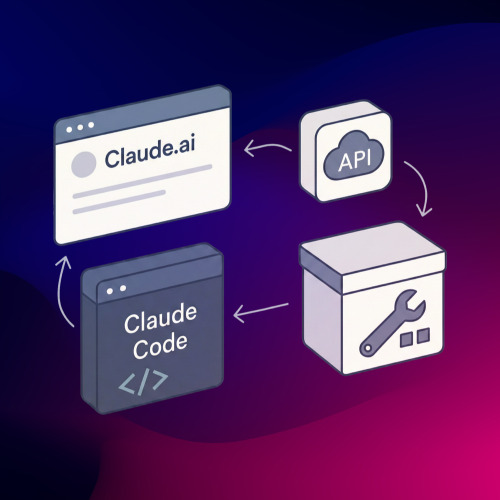
For companies already using the Model Context Protocol (MCP) to connect internal systems – whether a complex database, their own CMS, or project management tools – to AI, Skills are the logical next step. When a functioning MCP server is in place, the hardest part is done. Skills form the knowledge layer above it, capturing workflows and best practices so that the AI can apply them consistently.
An illustrative analogy:
- MCP provides the professional kitchen – access to tools, ingredients, and equipment.
- Skills deliver the recipes – the step-by-step instructions on how to create something valuable from them.
Together, they enable users to solve highly complex tasks without having to think through every individual step themselves.
The Operational Difference in Daily Work
Without Skills: Users connect their systems but often don't know what to do next. Every conversation starts from scratch. Since requests are formulated differently each time, inconsistent results inevitably arise. Often the technical interface is then incorrectly blamed – even though the actual problem is the lack of workflow guidance.
With Skills: Pre-built workflows activate automatically as soon as they're needed. Tool usage becomes consistent and reliable. Best practices are firmly embedded in every interaction. For companies systematically expanding their API infrastructure, this creates enormous efficiency gains.
Practical Example: Multi-System Coordination in Project Setup
What does a robust, Skill-driven process look like in practice? Let's take a scenario that regularly occurs in the development of scalable web applications: the Design-to-Development Handoff. A well-built Skill seamlessly orchestrates multiple systems:
- Design Phase: Assets are exported, design specifications generated, and an asset manifest created.
- Storage Phase: A project folder is created in the cloud, all assets uploaded, and shareable links generated.
- Task Creation: Development tasks are created in the project management tool, asset links attached, and assigned to the engineering team.
- Notification: A summary of the handoff is posted in the developer channel – including all relevant links and ticket references.
The crucial advantage: clear phase separation, precise data transfer between the various MCP connections, and automatic validation before transitioning to the next project phase.
Measurable Success: Validation Beyond Gut Feeling
Investments in process optimization must be quantifiable. When testing Skills, clear before-and-after comparisons can be drawn. A typical workflow for project creation illustrates this:
| Metric | Without Skill | With Skill |
|---|---|---|
| Interaction Steps | ~15 back-and-forth messages | 2 brief clarifying questions |
| Failed API Calls | 3 (with manual retry) | 0 |
| Token Consumption | ~12,000 tokens | ~6,000 tokens |
| Manual Corrections | Required multiple times | None |
These quantitative metrics directly demonstrate the return on investment. When workflows complete in significantly fewer steps and API failures are avoided, operational costs noticeably decrease. At the same time, qualitative metrics increase: workflows run through without errors, and the structural consistency of results is maintained across all sessions.
Strategic Rollout and Organization Management
The best automation only unfolds its value when it's used smoothly throughout the entire organization. The distribution mechanism for Skills is deliberately tailored to enterprise requirements.
For Individuals: Skills can be downloaded locally as ZIP folders and uploaded in personal settings.
For Teams and Organizations: Administrators can roll out Skills workspace-wide. Centralized management ensures that updates immediately take effect for all employees.
When processes in the company change – such as a new compliance review procedure or adjusted coding guidelines – the entire team doesn't need to be retrained. The Skill is centrally updated, and the AI model applies the new specifications flawlessly from the next interaction onward. This addresses a core problem of growing companies: the lossless scaling of process knowledge.
Additionally, Anthropic is advancing this development as an open standard (Agent Skills). The basic idea: portability. A well-defined Skill should function across platforms – regardless of which specific AI interfaces are in use.
The Invisible Competitive Advantage
Viewing AI tools in isolation is too short-sighted. Integrating complex APIs or large language models into everyday business operations alone doesn't yet deliver measurable competitive advantages. The real leverage emerges where domain-specific knowledge, established quality standards, and automated tool usage seamlessly interlock.
Those who merely give employees access to AI models shift the operational burden to writing increasingly longer prompts. Those who strategically invest in building robust Skills, however, transform unpredictable chat interfaces into highly precise execution engines.
Precisely this degree of systemic integration makes the difference when implementing high-performance digital products. It's not about whether technology is used – but how systematically it scales the company's own know-how. Those who consistently apply these architectural principles to their own software development create the foundation for sustainably efficient processes.